BRATISLAVA
Bratislava, the dynamic capital of Slovakia, is situated at the heart of Europe in the southwest of the country. It is the only capital in the world that directly borders two neighbouring states: Austria to the west and Hungary to the south.
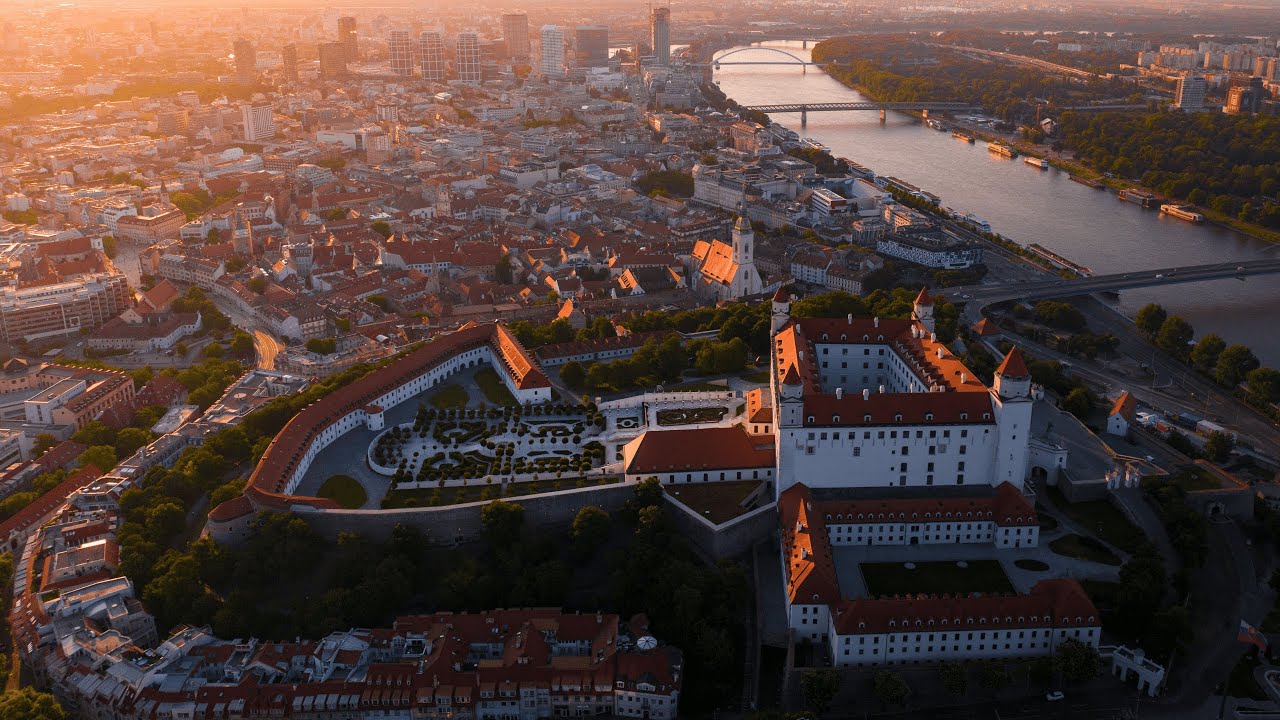
The city stretches along both banks of the mighty Danube, Europe’s second-longest river, where the central Danube basin begins at the picturesque Devín Gate. Together with Vienna (just 60 km away) and Budapest, Bratislava forms the “Golden Central European Triangle,” one of the continent’s most historically rich and fastest-developing regions.
Throughout the centuries, the city has borne many names: Istropolis in ancient Greek and Roman times, Pressburg to Germans, Pozsony to Hungarians, and Prešporok to Slovaks. Its modern name, Bratislava, was officially adopted in 1919.
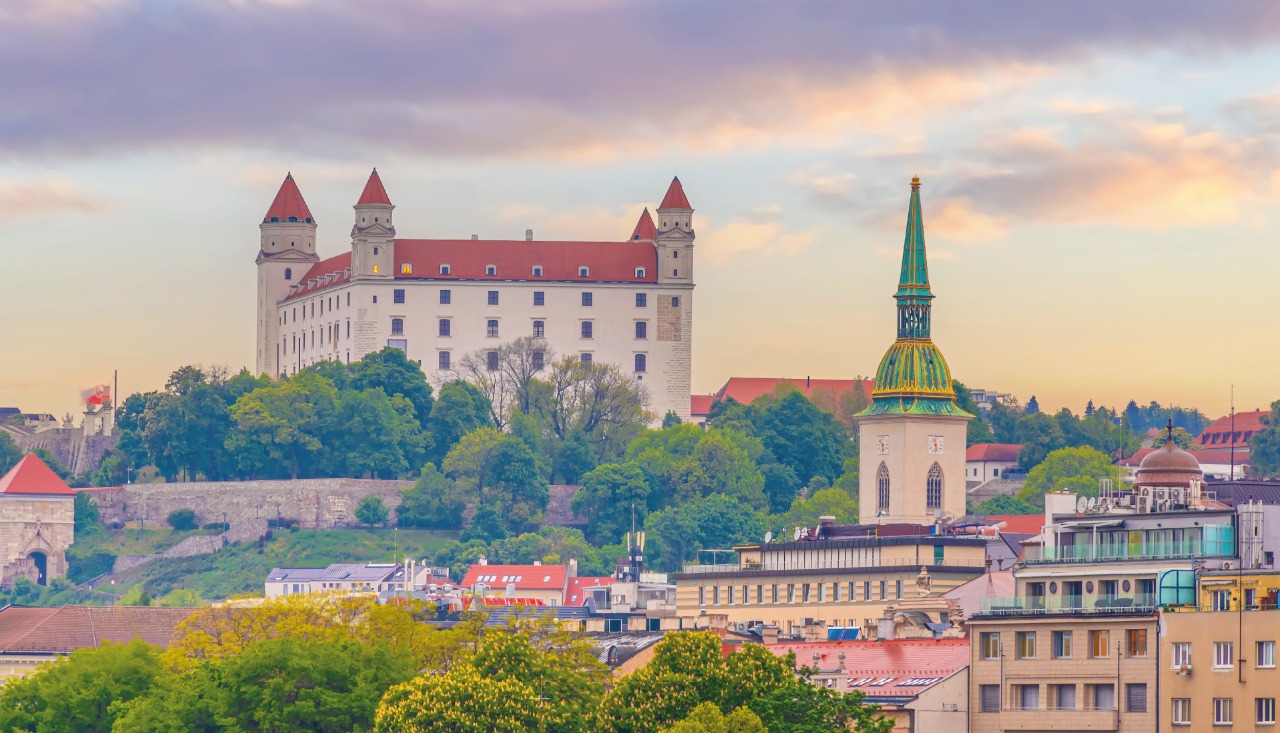
Bratislava’s history reaches back to Celtic settlements around 200 BC, followed by a Roman frontier outpost and later a major Great Moravian stronghold. From 1536 to 1783 it served as the capital of the Kingdom of Hungary, and for almost three centuries (1563–1830) it was the coronation city of Hungarian monarchs. In the magnificent Gothic St. Martin’s Cathedral, 11 kings, one queen (Maria Theresa), and 8 royal consorts were crowned, making it one of Europe’s most important coronation sites.
Today, visitors are enchanted by an exceptionally well-preserved historic centre and a remarkable collection of landmarks:
On the opposite bank, the iconic SNP Bridge with its UFO observation deck rises 95 metres above the Danube, delivering spectacular 360-degree vistas that can stretch up to 100 km on clear days.
The Danube itself is a vital artery of the city, framed by pleasant riverside promenades and lively boat traffic, connecting the historic centre with modern districts.
Bratislava’s culinary scene is equally inviting, ranging from traditional Slovak taverns to award-winning fine-dining restaurants. Slovakia’s crisp white and rosé wines, particularly from the nearby Small Carpathians region, have gained international acclaim in recent years.
With its beautifully preserved historic core, modern energy, and strategic location at the crossroads of European cultures, Bratislava offers visitors an unforgettable blend of imperial grandeur, charming medieval streets, and vibrant contemporary energy, making it a captivating destination where centuries of European history meet contemporary Central European charm.